Winter is tough on eczema-prone skin at the best of times. But some of the most common habits people reach for in the cold months — long hot showers, thick creams, extra layers — can actually make things significantly worse.
If your eczema tends to flare up every winter despite your best efforts, one of these five mistakes might be the culprit. Here's what to stop doing — and what to do instead.
Mistake #1: Taking Long, Hot Showers or Baths
We get it. There's nothing more tempting on a cold winter morning than a long, steaming hot shower. But for eczema-prone skin, this is one of the most damaging habits you can have.
Hot water strips the skin's natural lipid barrier — the protective layer of oils that keeps moisture in and irritants out. Once that barrier is compromised, skin loses moisture rapidly and becomes far more reactive to triggers.
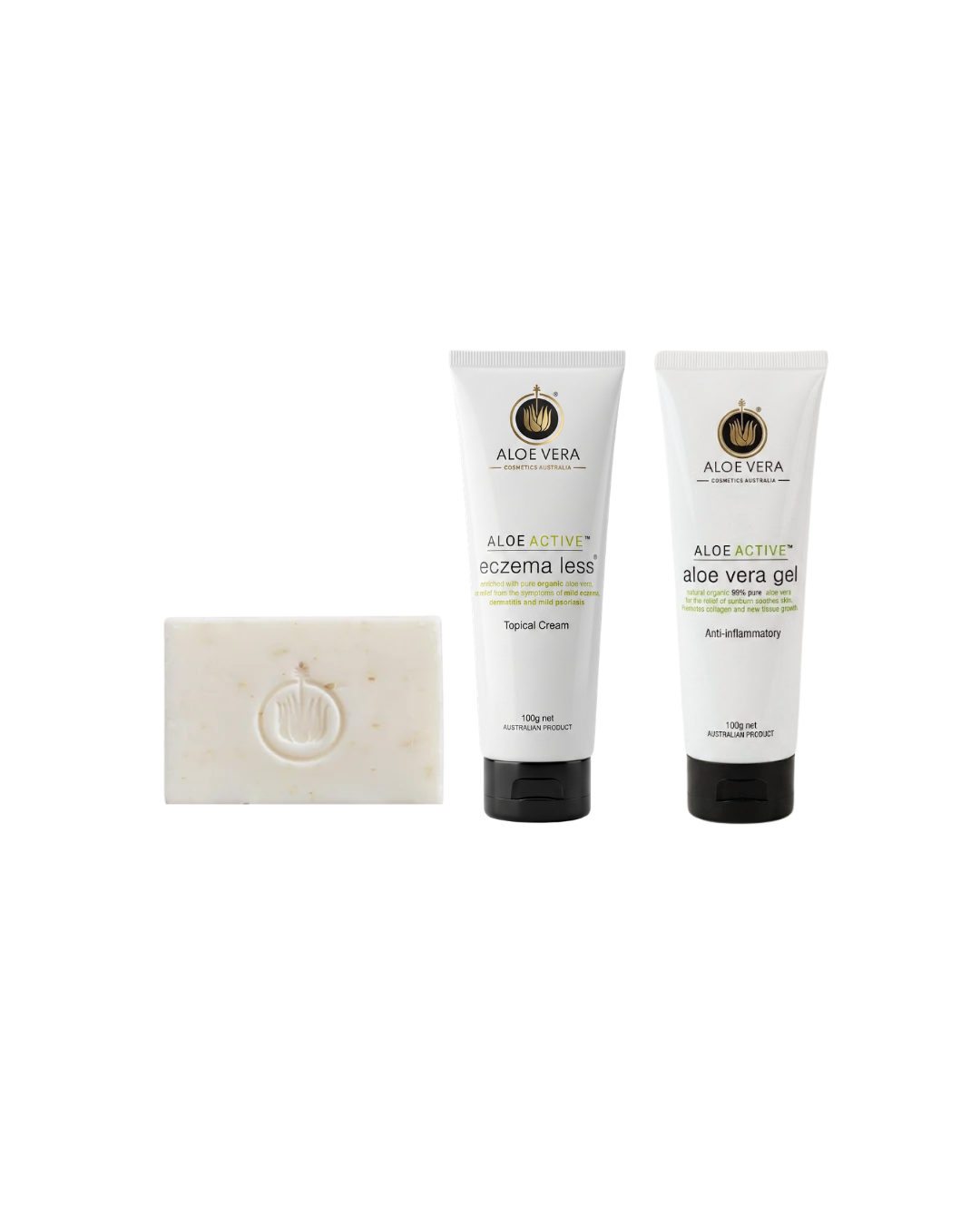
What to do instead: Keep showers to 5–10 minutes and use lukewarm water. Immediately after patting dry, apply a soothing layer of Aloe Vera Gel — 99% Pure | ALOE ACTIVE™ to damp skin to lock in moisture before it evaporates.
Mistake #2: Using Fragranced Soaps and Body Washes
Fragrance is one of the most common contact allergens for people with eczema — and yet it's found in the vast majority of mainstream soaps, body washes, and cleansers. In winter, when the skin barrier is already weakened, fragranced products can trigger intense flare-ups even in people who tolerate them in summer.
This includes products marketed as "natural" or "botanical" — essential oils and plant extracts can be just as irritating as synthetic fragrances for sensitive skin.
What to do instead: Switch to a genuinely fragrance-free, colour-free cleanser formulated for eczema-prone skin. Our Eczema Less® Soap — Fragrance-Free | Colour-Free is 100% Australian made and free from all common irritants — safe for daily use even during active flare-ups.
Mistake #3: Moisturising Too Infrequently
Many people with eczema moisturise once a day — usually after their morning shower — and wonder why their skin is still dry and irritated by evening. In winter, once a day simply isn't enough.
Cold air and indoor heating continuously pull moisture from the skin throughout the day. Without regular top-ups, the skin barrier breaks down progressively, making it increasingly vulnerable to flare-ups as the day goes on.
What to do instead: Moisturise at least twice daily — morning and night — and reapply to hands and exposed areas whenever they feel dry. Layer a lightweight Aloe Vera Gel first for deep hydration, then seal with the Sensitive Plus Moisturiser | BEAUTY OF ALOE™ to lock it in.
Mistake #4: Ignoring Flare-Ups and Hoping They'll Resolve on Their Own
It's tempting to wait out a flare-up, especially if you've had them before and they've eventually settled. But untreated eczema tends to escalate — the itch-scratch cycle damages the skin further, increases the risk of infection, and makes the flare harder to resolve.
In winter, when the skin is already under stress, early intervention makes a significant difference to how quickly and completely a flare-up resolves.
What to do instead: At the first sign of redness, itching, or irritation, apply a targeted treatment directly to the affected area. The Eczema less® Treatment Cream | ALOE ACTIVE™ is formulated with pure organic aloe vera to calm inflammation and relieve symptoms of mild eczema and dermatitis — use it as soon as a flare begins, not after it's taken hold.
Browse our full Eczema & Psoriasis treatment range for more targeted options.
Mistake #5: Wearing Irritating Fabrics Next to Your Skin
Winter wardrobes are full of eczema triggers. Wool, polyester, and other synthetic fabrics are common irritants that cause friction, trap heat, and provoke the itch-scratch cycle — especially under clothing where skin can't breathe.
Even fabrics that feel soft to the touch can be problematic for highly sensitive skin. And don't overlook laundry detergent — residue left in clothing after washing is a frequently overlooked trigger.
What to do instead: Wear 100% cotton or bamboo as your base layer, directly against the skin. Wash all clothing and bedding in a fragrance-free, dye-free detergent, and skip the fabric softener entirely. If you love a wool jumper, always put a cotton long-sleeve underneath as a barrier.
The Bonus Mistake: Not Having a Consistent Routine at All
The single biggest factor in managing eczema through winter isn't any one product or habit — it's consistency. Eczema responds to routine. A simple, twice-daily regimen using the right products, applied every day without fail, will outperform an elaborate routine done sporadically every time.
If you're looking for a complete, curated set of products to build your routine around, our Eczema & Psoriasis Treatment Pack has everything you need in one box — formulated to work together for maximum results.
Your Winter Eczema Checklist
- ✅ Lukewarm showers, 5–10 minutes max
- ✅ Fragrance-free, colour-free cleanser
- ✅ Moisturise at least twice daily
- ✅ Treat flare-ups early with a targeted cream
- ✅ Cotton or bamboo base layers; fragrance-free laundry detergent
- ✅ Stay consistent — every day, not just when it's bad
Small changes, done consistently, make a big difference. Your skin can stay calm and comfortable this winter — it just needs the right support.