Psoriasis and eczema are two of the most common skin conditions in Australia — and they're also two of the most frequently confused. Both cause red, irritated, itchy skin. Both can flare and remit. And both can significantly impact quality of life.
But they are fundamentally different conditions with different causes, different appearances, and different management approaches. Getting the right diagnosis matters — because what works for one can sometimes make the other worse.
Here's how to tell them apart, and what to do about each.
What Is Eczema?
Eczema (atopic dermatitis) is a chronic inflammatory skin condition caused by a combination of genetic and environmental factors. At its core, eczema is a skin barrier problem — the skin's protective outer layer doesn't function properly, allowing moisture to escape and irritants and allergens to enter.
Eczema is strongly associated with the "atopic triad" — a cluster of related conditions that often occur together: eczema, asthma, and hay fever. If you or a family member has one of these, you're more likely to have the others.
Eczema is most common in children (affecting around 1 in 3 Australian children at some point) but can persist into or first appear in adulthood.
What Is Psoriasis?
Psoriasis is an autoimmune condition in which the immune system mistakenly accelerates the skin cell production cycle. Normally, skin cells are produced and shed over about a month. In psoriasis, this cycle happens in just a few days — causing cells to build up on the surface faster than they can be shed, forming the characteristic thick, scaly plaques.
Psoriasis affects around 2–3% of Australians and can develop at any age, though it most commonly appears between 15–35 years or 50–60 years. It's a systemic condition — meaning it affects the whole body, not just the skin — and is associated with an increased risk of psoriatic arthritis, cardiovascular disease, and other inflammatory conditions.
How to Tell Them Apart: Key Differences
Appearance
Eczema typically presents as:
- Red, inflamed, weeping, or crusting patches
- Dry, scaly skin that may crack and bleed
- Skin that looks "wet" or oozing during active flare-ups
- Thickened skin (lichenification) in areas of chronic scratching
Psoriasis typically presents as:
- Well-defined, raised plaques with a silvery-white scale on top
- Skin that looks "dry" rather than weeping
- A clear border between affected and unaffected skin
- Possible pitting or discolouration of the nails
Location on the Body
Eczema most commonly appears on:
- The inner elbows and backs of knees (flexural areas)
- The face, neck, and around the eyes
- The wrists, hands, and ankles
- In infants: the cheeks, scalp, and trunk
Psoriasis most commonly appears on:
- The outer elbows and knees (extensor surfaces — the opposite of eczema)
- The scalp (often the first area affected)
- The lower back and buttocks
- The nails, palms, and soles of the feet
Itch
Both conditions cause itching, but the character is different. Eczema itch tends to be intense, persistent, and worsened by heat and sweating — often described as an uncontrollable urge to scratch. Psoriasis itch is typically milder, though it can be significant, and is more often accompanied by a burning or stinging sensation.
Triggers
Eczema triggers include: fragranced products, wool and synthetic fabrics, heat and sweating, dry weather, stress, certain foods, dust mites, and pet dander.
Psoriasis triggers include: stress, skin injury (the Koebner phenomenon — where new plaques appear at sites of trauma), infections (especially streptococcal throat infections), certain medications (including beta-blockers and lithium), alcohol, and smoking.
Can You Have Both?
Yes — it's possible, though uncommon, to have both eczema and psoriasis simultaneously. Some people are also misdiagnosed with one when they have the other, particularly in atypical presentations. If you're unsure, a GP or dermatologist can usually distinguish between them with a clinical examination — and in some cases, a skin biopsy.
Natural Management: What Works for Both
While the underlying causes differ, both conditions benefit from gentle, fragrance-free skincare that supports the skin barrier and reduces inflammation. Aloe vera is one of the few natural ingredients with evidence supporting its use in both eczema and psoriasis management.
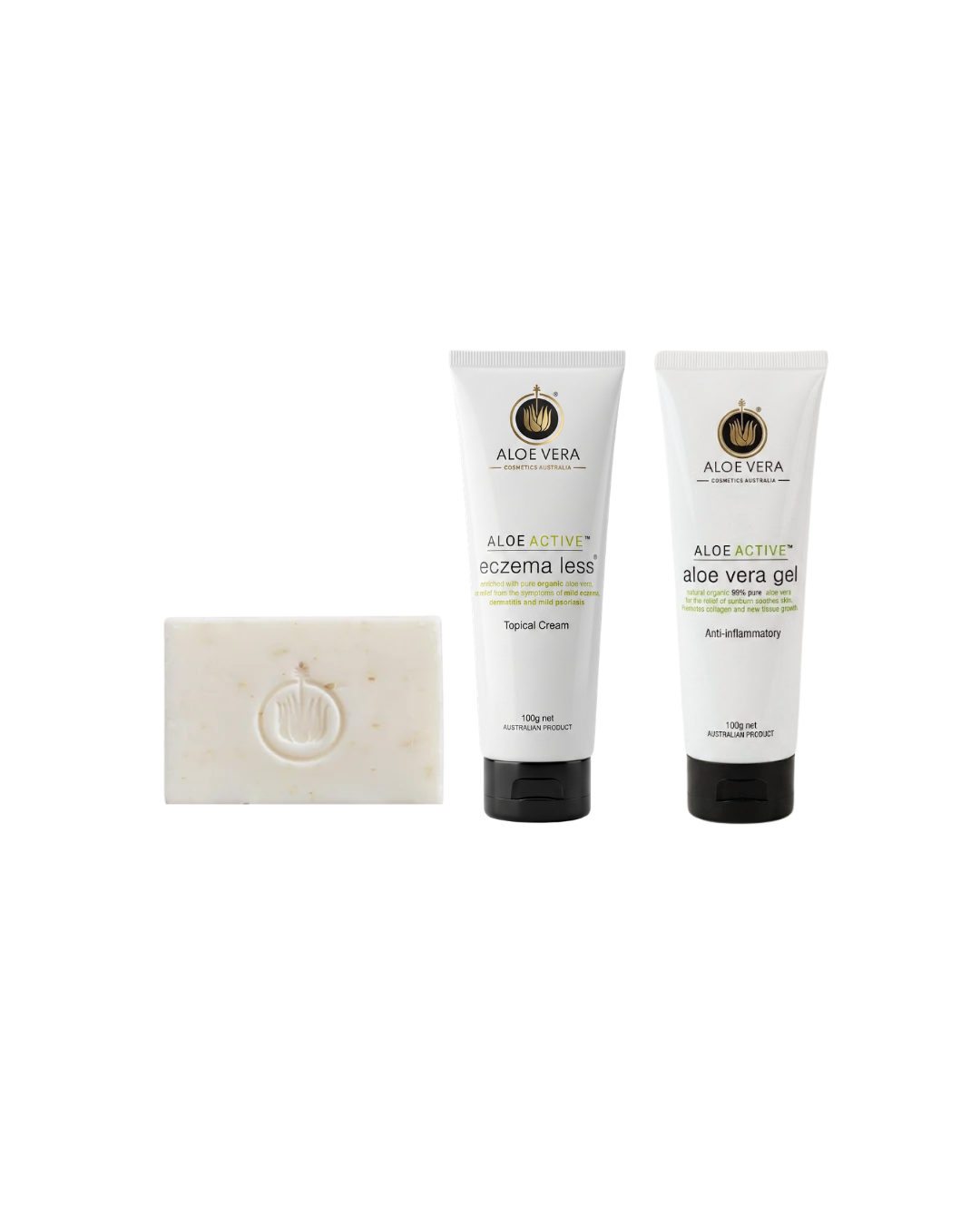
Our Aloe Vera Gel — 99% Pure | ALOE ACTIVE™ provides anti-inflammatory relief and deep hydration for both conditions — soothing active flare-ups and supporting barrier repair between them.
For targeted treatment, the Eczema less® Treatment Cream | ALOE ACTIVE™ is formulated to relieve symptoms of mild eczema and dermatitis, while our Complete Psoriasis Care Pack | ALOE ACTIVE is designed specifically for psoriasis-prone skin.
Browse our full Eczema & Psoriasis treatment range for the complete selection.
When to See a Doctor
Self-diagnosis has its limits. See a GP or dermatologist if:
- You're unsure which condition you have
- Your symptoms are severe, widespread, or rapidly worsening
- Over-the-counter treatments aren't providing adequate relief
- You have joint pain alongside your skin symptoms (which may indicate psoriatic arthritis)
- Your skin shows signs of infection
Quick Reference: Psoriasis vs. Eczema
| Eczema | Psoriasis | |
|---|---|---|
| Cause | Skin barrier dysfunction + immune response | Autoimmune (accelerated skin cell turnover) |
| Appearance | Red, weeping, crusting patches | Raised plaques with silvery scale |
| Location | Flexural areas (inner elbows, knees) | Extensor surfaces (outer elbows, knees), scalp |
| Itch | Intense, persistent | Moderate, may burn or sting |
| Age of onset | Usually childhood | Any age, peaks 15–35 and 50–60 |
| Associated conditions | Asthma, hay fever | Psoriatic arthritis, cardiovascular disease |
Whether you're managing eczema, psoriasis, or both, the right skincare routine makes a meaningful difference. Gentle, fragrance-free, aloe vera-based formulations are a safe and effective foundation for either condition — supporting your skin while you work with your healthcare provider on the broader management plan.